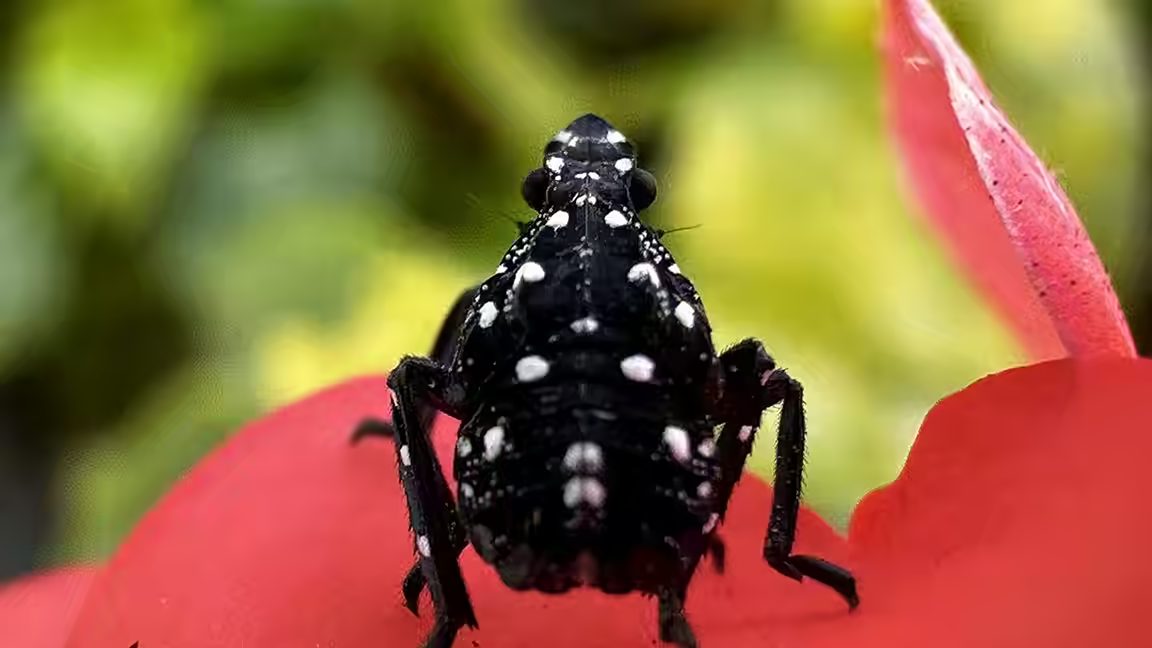
Hungary has confirmed the European Union’s first detection of the spotted lanternfly, an invasive insect associated with crop damage in the United States. The specimen was found in southern Bács-Kiskun County, which borders Serbia, and laboratory testing verified its identity, Hungary’s food-chain safety agency Nébih said on September 24, 2026.
A resident who did not recognize the insect alerted the agency. After testing confirmed the pest, authorities began quarantine measures. Nébih described the finding as the first confirmed appearance in both Hungary and the wider EU, where the species is classified as a quarantine pest. That designation supports official action intended to prevent an introduced population from becoming established and spreading.
The spotted lanternfly, whose scientific name is Lycorma delicatula, is native to Southeast Asia and can reach about 2.5 centimetres in length. It feeds on a broad range of plants and presents a particular concern for grapevines, fruit trees and other crops. Heavy infestations can weaken plants, while the insect’s presence may also contribute to conditions that encourage other pests and disease.
Hungarian officials emphasized early reporting and public vigilance because a newly introduced invasive species can be easier to contain before it establishes a large breeding population. The fact that a member of the public initiated this detection illustrates the role residents can play, although identification and confirmation remain tasks for specialists and laboratories. The agency did not announce the size of any population or the route by which the insect reached the county.
Experience in the United States shows the potential economic stakes. The insect was first detected there in Pennsylvania in 2014 after an egg mass was found in a shipment of stone from China. It subsequently spread beyond the original area. A Pennsylvania State University study published in 2020 estimated that the pest was responsible for $554 million in annual losses and nearly 5,000 lost jobs per year in Pennsylvania. Those figures describe one study’s assessment in a heavily affected US state; they are not a forecast for Hungary or the EU.
The European finding places attention on surveillance, movement controls and the inspection of materials that could carry insects or egg masses. Bács-Kiskun’s location near an external EU border may also make coordination and monitoring important, but the supplied evidence does not establish where the specimen originated.
As of the event date, the confirmed facts were limited to a first laboratory-verified detection and the start of quarantine measures. Whether the case represents an isolated arrival or evidence of a wider population will depend on follow-up inspections. Authorities’ immediate priority is to keep the species from taking hold and threatening vineyards, orchards and other vulnerable plants.