California has legalized a class of small, portable solar systems designed to plug into a home's electrical supply, creating a new route into residential generation for renters and households that cannot install rooftop panels. Governor Gavin Newsom signed the measure on September 30, and its framework is due to take effect in 2027.
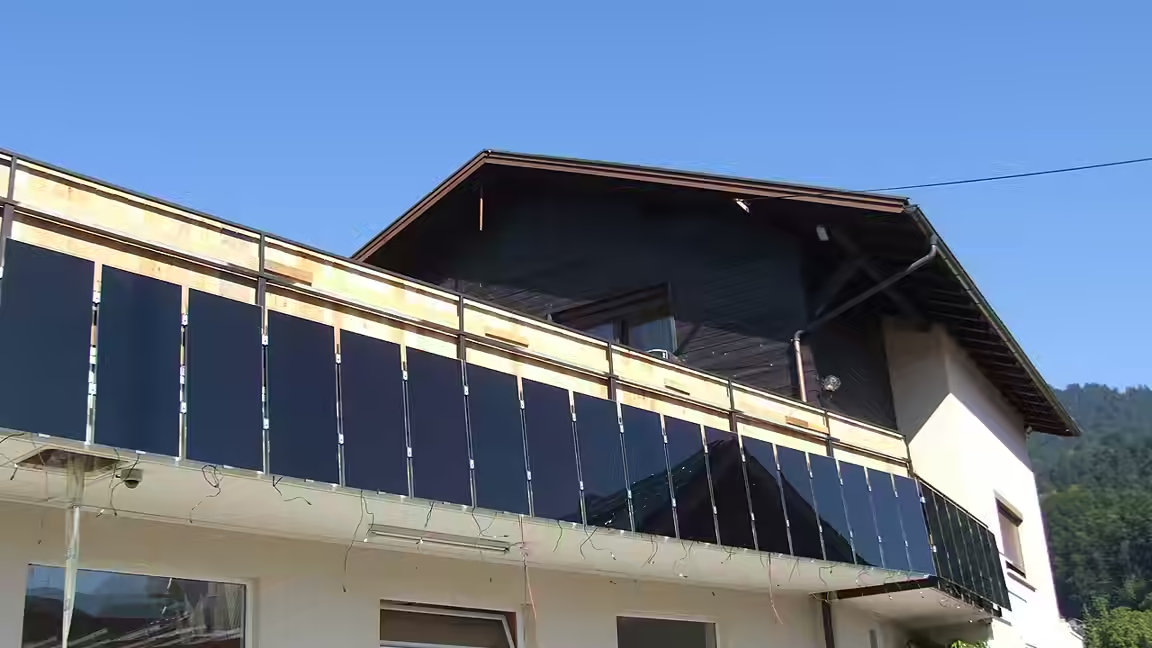
Often called balcony solar, the systems typically combine a few photovoltaic panels with an inverter and cables. They can be mounted on a balcony, placed outside a window or set up in a yard. Their attraction is that they are smaller and cheaper than a conventional rooftop array and may avoid professional installation in some configurations. Current products cited by KQED range from about $300 to $2,200.
The law does not make every existing kit immediately legal for plug-in use. Eligible systems will have to meet California's technical requirements and receive certification from an independent safety organization. They must be rated at no more than 1,200 watts per home, serve on-site electricity demand and include protection that stops power flowing back toward the grid during an outage. Products already on the market do not yet satisfy the full framework, so users remain subject to existing utility interconnection rules.
The measure also replaces the conventional rooftop-solar registration process for qualifying systems with a free and immediate procedure. Advocates argued that fees and waiting periods undermined the purpose of a low-cost appliance that consumers could install themselves. Manufacturers are now developing products intended to meet the California standard, with compliant models expected to reach the market in 2027.
Supporters say the technology could extend some benefits of home solar to apartment residents, people with unsuitable roofs and households unable to finance a larger installation. Proponents estimate a system could cover up to one-fifth of an apartment's electricity needs and save as much as $500 a year, although actual results will depend on placement, sunlight, consumption and the final product design.
The bill attracted broad bipartisan support, but major utilities including PG&E and SDG&E opposed it. Their concerns included electrical safety and the possibility of shifting grid costs toward customers without solar. Firefighter and utility-worker unions moved from opposition to neutrality after lawmakers added compliance requirements tied to state and national electrical codes.
California joins a growing group of states that have adopted rules for balcony solar. The state's size could give manufacturers a strong incentive to produce certified US-market equipment. The legislation sunsets at the start of 2030, meaning lawmakers and regulators will have a limited period to assess adoption, safety and the effect on electricity customers before deciding what comes next.