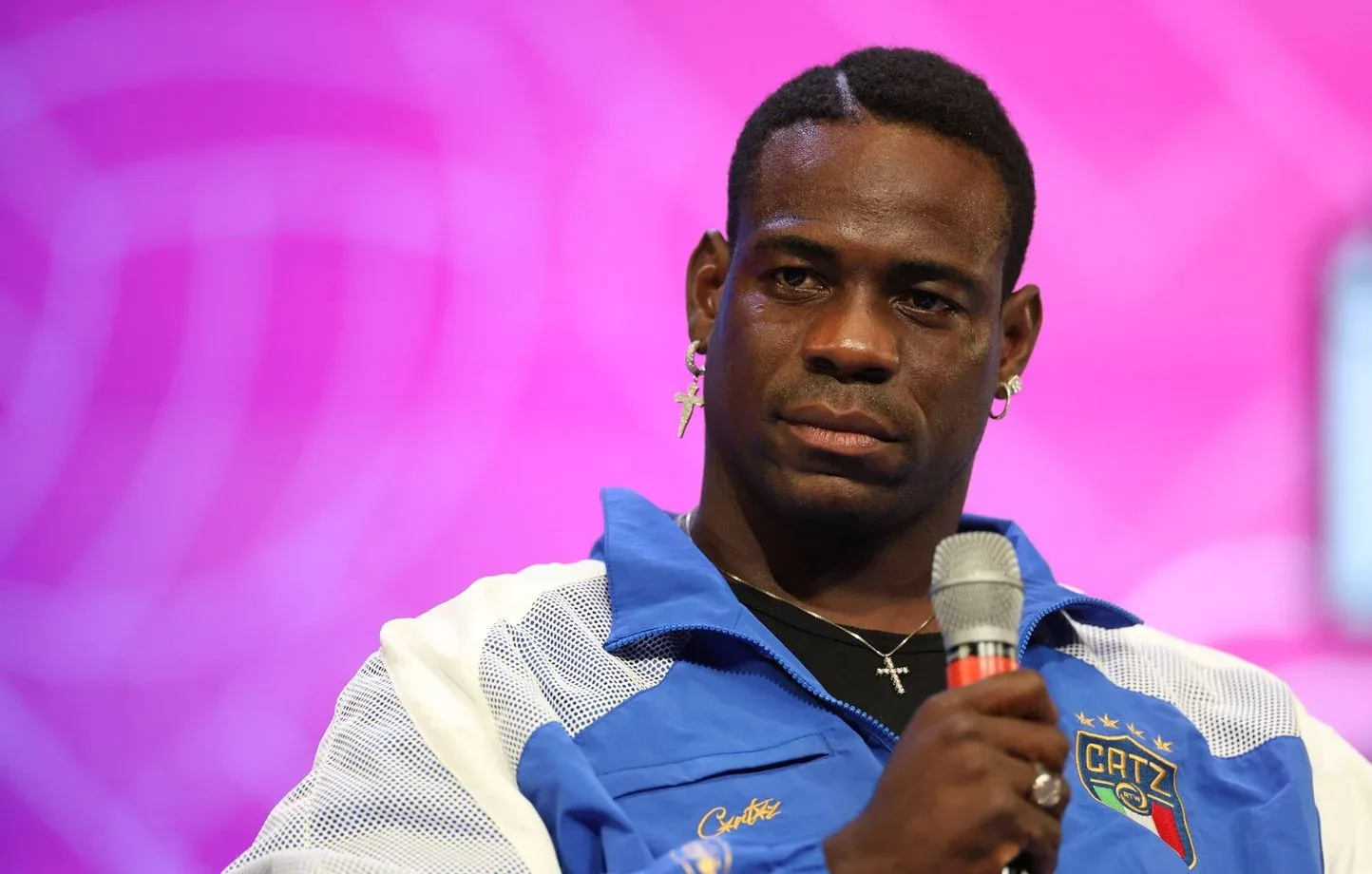
European football has been pulled into an unexpected new controversy after Italian striker Mario Balotelli announced that he wants to return to professional competition under the name Maria Bellotti and seek a place with a women’s football team. According to him, the proposal is intended primarily as a protest rather than an ordinary career move. The former men’s professional says he wants governing bodies to clarify exactly which biological, medical and regulatory criteria determine eligibility for women’s competitions as debates around transgender participation continue across international sport.
Balotelli’s announcement immediately exploded across social media. Supporters of his stunt described it as an attempt to force governing bodies to address questions of competitive fairness more explicitly, while critics argued that reducing a complicated subject involving transgender athletes to a publicity stunt risks misrepresenting both current regulations and the experiences of athletes affected by them. Within hours, edited images showing Bellotti wearing a women’s football kit under the name MARIA had circulated widely online, turning the announcement into one of the most discussed football stories of the day.
The most provocative part of Balotelli’s proposal is his stated ambition to compete eventually at the highest level of European women’s club football. He claims that if a club were willing to sign him and if he satisfied all applicable eligibility requirements, his ultimate objective would be to reach the UEFA Women’s Champions League. In practice, however, participation in elite women’s competition is governed by sporting regulations rather than simply by a player changing a name or declaring an intention to compete. Any real case would depend on the specific eligibility framework established by the relevant federation and competition organizers.
Balotelli nevertheless insists that this regulatory complexity is precisely the point of his campaign. He says he wants football authorities to publish rules that athletes and supporters can understand without ambiguity, particularly as governing bodies across different sports have adopted substantially different approaches to transgender participation. Some federations rely on sex-based categories with tightly defined eligibility requirements, while others have previously incorporated hormone-related criteria or separate participation policies. Those rules have also changed substantially over time as sports organizations respond to new scientific evidence, legal challenges and political pressure.
The striker’s decision to use the name Maria has become the most recognizable symbol of the story. Social-media accounts immediately began placing the name on customized shirts, while meme pages created mock transfer announcements and Champions League graphics imagining Balotelli lining up for a women’s club. What began as a proposed protest quickly became another example of how modern sports controversies can transform into internet culture within hours.