SpaceX has scheduled the 14th flight of its Starship system for September 28, with the mission intended to send the Ship upper stage into orbit for the first time. The 75-minute launch window at the company’s Starbase site in South Texas was set to open at 8:15 a.m. Eastern time, or 7:15 a.m. locally.
The flight profile marks a significant expansion from Starship’s first 13 test missions, which remained suborbital and lasted no more than about 65 minutes. If the mission proceeds as planned, Ship will complete six circuits of Earth, release 26 next-generation Starlink Version 3 internet satellites and then leave orbit for a splashdown in the Pacific Ocean off Chile. The full sequence is expected to take nearly 10 hours.
Super Heavy, the system’s first-stage booster, will follow a much shorter path. It is scheduled to splash down in the Gulf of Mexico about seven minutes after liftoff. SpaceX’s longer-term architecture calls for both stages to return to the launch site for capture by the tower’s mechanical arms. The company has previously caught Super Heavy three times, but Flight 14 is not intended to attempt a tower catch of Ship.
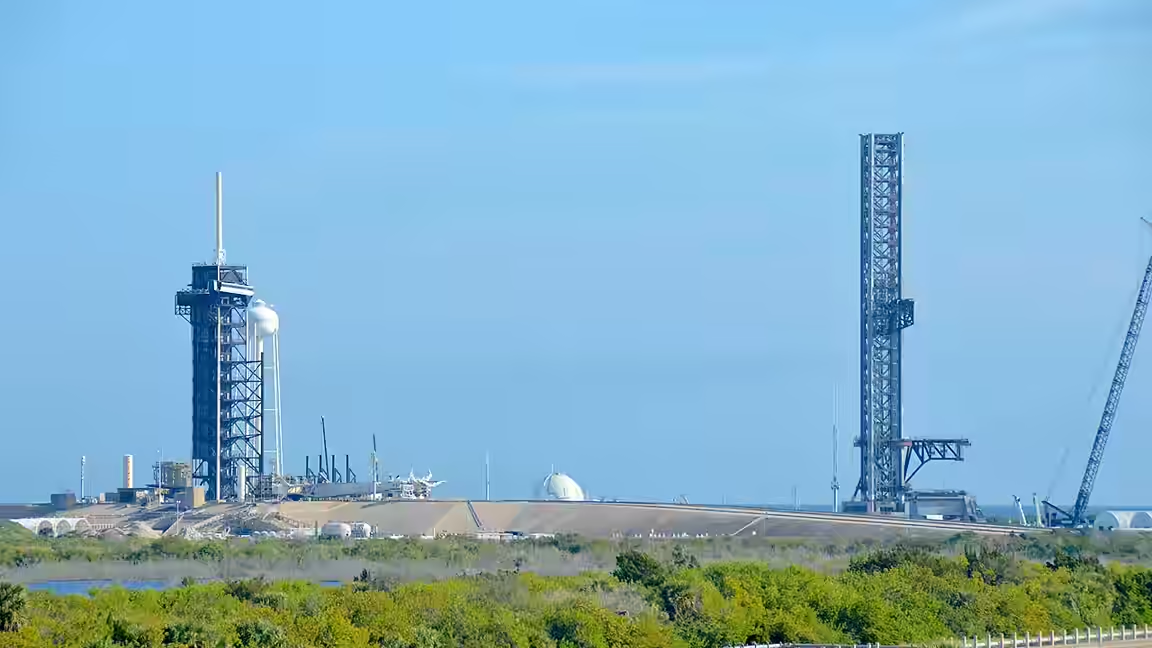
Fully assembled, Starship stands about 124 metres tall and consists of the Super Heavy booster and a 52-metre upper stage. Both components are designed for rapid reuse. The orbital attempt remains a development flight, however, and a successful mission would not by itself make the system ready for crewed or deep-space operations.
Several major technical demonstrations would still be required. Missions beyond Earth orbit are expected to depend on multiple tanker versions of Ship transferring propellant to another spacecraft in space. SpaceX has not yet demonstrated that off-Earth transfer. A life-support system will also be needed before the vehicle can carry people. NASA selected a Starship-derived vehicle as a crewed lunar lander for its Artemis program, increasing the importance of those later milestones.
The planned satellite deployment would add an operational payload to the extended test. SpaceX currently operates thousands of Starlink spacecraft in low Earth orbit, and the 26 V3 satellites are described as the first members of a new generation. Their release will test Ship’s ability to carry and deploy payloads during an orbital mission rather than following the shorter trajectories used on earlier flights.
Flight 14 is therefore both an orbital-duration test and a step toward the reusable transport system SpaceX envisions. Its key measures will include reaching the intended orbit, completing the satellite deployment, sustaining Ship through multiple revolutions and executing a controlled return to the Pacific.